
Learning How to Walk
The polished surface throws back the arrow. - Florence Hartley

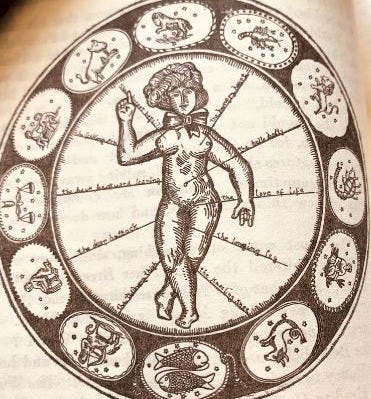
Florence Hartley’s classic, The Ladies’ Book of Etiquette, and Manual of Politeness, was published in 1861. It is a blueprint for perfect female social behavior, divided by chapter into occasions. Each situation and every place has its own strategies, rules, and proscriptions. Her book covers weddings, letter writing, ballroom and church protocol, health, rules of conversation—the whole experience of the upper classes, real or ideal.
For example, how does one behave in a good hotel? Women should never sit down to the piano uninvited, unless you are alone in the parlor. If another lady looks slightly sloppy, offer to help her but speak in a low tone. Transience has its own laws, so acquaintances made in a hotel may be dropped afterwards, if desirable, without rudeness. Dinner is a battlefield, full of traps and anti-personnel devices. Women should always beware of the Fifth Deadly Sin: If there is a delicacy upon the table, partake of it sparingly, and never help yourself to it a second time. Hand gestures in conversation are strictly forbidden. Naturally, the knife is only for cutting. When going to parties, you’re allowed a half hour grace period in punctuality; if you are even later, never apologize, as it draws attention to your tardiness. Women should not talk to men for too long, but it is advisable to say at least something to each one of them in the room. Outdoor etiquette is also important because you are at the mercy of the court of public judgement. Too much make-up makes women look like chorus girls, all of whom are prostitutes. Never look back! It is excessively ill-bred! Wear no jewelry in the street excepting your watch and brooch. Traffic can be fatal, especially in a corset: Stop! don't you see there is a carriage coming? Do you want to be thrown down by the horses? You (think you) can run across? Everyone is a potential spy: Make no remarks upon those who pass you… And finally, If you do stop in the street, draw near the walls, that you may not keep others from passing—a piece of advice with a peculiarly ominous quality. For Florence Hartley, the boulevard was a haunted and menacing place.
Readership of The Ladies’ Book of Etiquette was solidly bourgeois, and the book is clearly written to help this class emulate the manners of aristocrats and nabobs. Despite the loopiness of the endless regulations and prohibitions, its influence has been long lasting. All subsequent etiquette books were composed in its wake, not to mention novels, TV shows, and movies depicting the lives of the late Victorian upper classes. The curious thing about Hartley herself is that almost nothing is known about her, not even the dates of her birth and death. Biographical sketches state only that she never married. It is as if she disappeared into a phantom world of orchestrated movement, precise phonetics, and marmoreal modesty. With no past, she was herself perfect—all she could leave behind was her model gestures.
In 1922, Emily Post published Etiquette in Society, in Business, in Politics, and at Home. It is still in print and undergoes yearly revision (her great-great grandchild Lizzie is the present editor). Post’s quintessential text appeared during the Gilded Age, an epoch of extreme wealth and brutality whose glamour demanded its own language and ways of being. The idea was to train American women—meaning European immigrants with differing moral codes—via an invented tradition that remade them as glittering feminine images of the New World. Not just correct speech but body movements must be learned to preserve the status quo, a rarefied set of actions bound to project class (or camouflage it, as the case may be). Gestures and phrases are all keys to a secret yet highly visible society. By adhering to the laws of etiquette, you create a double of yourself who acts by the rules of the game.
Etiquette in Society is written in short epigrams, both glib and mildly amusing, meant to edify as well as teach ‘proper’ habits. Yet it is different than the earlier Ladies’ Book of Etiquette. Post’s pedagogy is a sweeping dismissal of several prior rules once thought to be inviolable. For example, in formal dining it was no longer important which fork you used (the salad fork could be taken up almost indiscriminately). According to her, ‘ethics and honor’ were more important: one could act honorably with little knowledge of cutlery 1. The casual fork-user may be a man of peerless—business? social?—ethics. The veneer is the thing, the true mask. Americans could instantly take on the trappings of an old ruling class while skipping the ancient business of bloodlines and private schooling. This Americans ruling class can invent itself and take what it likes, modify at will, and erect its own intricate walls. But American etiquette is devious at heart. So if women are told never to be wittier or smarter than men at a party, Post is inferring that women should watch and listen. This meek facade will allow you to observe the male universe of a room from an appropriate distance. As Sun Tzu said, Be where your enemy is not.
Emily Post was a keen observer of men and an able forensic pathologist of social society. Grotesque manners, a blustery, domineering exterior, means the guy’s faking his social stature. For Ms. Post, manners were far, far more important than actual education. One was permitted to rise in class—at least in theory. Post was especially concerned with handshakes: Who does not dislike a ‘boneless’ hand extended as though it were a spray of sea-weed, or a miniature boiled pudding? Which sounds like a line from a Gothic horror story. Proper business comportment demands that one lock eyes when shaking, hold for 2-3 seconds, shake three times at most, palm sideways with a slight lean-to (using both hands might be seen as domineering), stand no closer than 18″, with grip firm but never imposing. Avoid grotesque affectation and (hands) shaken violently sideways, as though it were being used to clean a spot out of the atmosphere. Not shaking hands with another man is a declaration of war, but you can subtly show disdain by ignoring one or two of the above rules (I’m gonna stand 15″ away and shake for 5 whole seconds because we both know you’re a real bastard). In the end, Post is far more concerned with men than women. But always men as seen by women—the silent judges who know more as observers than the objects do about themselves. This is why, as she reminds us, women rarely shake hands with men.
Etiquette travelled downward. It was taught in girls’ reformatories and orphanages. It was the whole of the so-called educational curricula in women’s corrections. Though being a seamstress is really no different than men’s trades (and just as physically harsh), it was treated like prim domestic service. Morals hummed out of the sewing machine, along with the most productive time-management and the stitching-up of temptations of the flesh. Good manners might save the lost street urchin. A submissive countenance curbs wildness and abandon. Home economics prevents alcoholism. Speaking right makes you sound educated (elocution is less an editing of the vocabulary than control of rhythm, pitch, and the smothering of accents deemed uncouth). All of these strange modifications in mind and body were drilled into girls whose lives had nothing in common with Emily Post’s golden society. In reform school literature, young girls sit smiling over machines or practicing their pas de cheval. These lessons, in school or prison or in the home, had great influence and tried to create a world of manners for the girls of taverns and streetcorners. Codes that one could envy and adopt and even parody.
Being ‘old fashioned’ is different for the poor. It is not conservation but another invention, sometimes desperate, made of memories of how one was told one could face the world. It is not a question of trying to appropriate the mores of the bourgeoisie—far from it, actually—but of making up oneself because there is no other choice. Ah, putting on airs. It seems comical that her cursive was so neat and that she walked through school with her head held high (and sometimes she could also fight). Middle class kids could only laugh at the prescribed curtseys and upright posture, feet straight ahead with toes very slightly outward, at every attempt to glide not stumble—a simulation of grace which looks like she is trying to conceal her born station (her own class could also turn against her, with its own brand of ruthlessness). You don’t belong to your beautiful step. We see through you as if you were a ghost.
A young working class girl was taught how to walk correctly by her grandmother: how to turn, keep arms and elbows close, how to make an impression lightly—a way to act but also to protect oneself. Around them both, a stockpile of furniture from last century: a willow plate in a vitrine, smell of lilacs or lilac scent. Such places have their own time adjacent to the outside world. Along with these manners from books, practiced like her grandmother practiced before her, she had to learn the laws of the open city. The inevitable contradictions appear between home and the world and she must figure this all out by herself. A first moment of genius, hard won; and if it this genius was just a necessity, then it was genius twice. In the slight hesitations, the awkwardness of her limbs as she turns and walks and rehearses her gait, lies a secret which makes me a prisoner to a distant scene.
This did not apply to the hostess, of course, who must know place settings as well as a multitude of correct serving regulations. But she was then free to use these laws for her own purposes.
So beautiful--like the scent of lilacs.
Nice work!